February 6
2014

February 6
2014
Dictionary Challenge: List Of Bestselling Drugs
 I am now adding a list of the top 200 pharmaceutical products in the Unites States into my dictionary, in addition to my regular medical d-defines. The list I’m using contains the products’ brand names, generic names, manufacturers, and medical use. CLICK HERE for the list.
[NOTE: The list in the link has been adjusted to the 2013 sales rankings. I have a list that I printed out in 2012. Therefore, my personal list is much more extensive and ordered differently. Unfortunately, the old link, from which I obtained my list has been taken down and updated with the new link I have put in this post.]
Happy dictionary building!
Love, Speed & Accuracy,
Elsie Villega







February 6
2014

February 3
2014
The Different Types Of Q & A
 Q & A testing can be a very varied experience. The test can be a variety of short answers, long answers, multi-syllabic words, short words, medical terminology, etc. To be prepared you should practice a variety of different Q & A formats. I compare it to being a runner who can marathon, sprint, and hurdle jump.
Below is a list of different types of Q & A formats. From experience, I think that you should have practice takes that include, or represent, all of the following formats that are contained in the list. This is something that I have learned through creating my own study curriculum to help me advance through my steno goals. Hopefully, this will also help other students.
Love, Speed, and Accuracy,
Elsie Villega
Types Of Q & A Formats:
1) Short questions with long answers, or long questions with short answers. With this type of Q & A, be prepared that the writing of the designations will not be as rhythmic as it is in popcorn Q & A (see below). Be sure not to drop the short part of the exchange if you happen to be trailing the speaker on the long part of the exchange.
2) Long questions with long answers. These can be comparable to a literary take sometimes.
3) Literary like Q & A. This can contain long questions and/or answers that are chock full of multi-syllabic words. You might find your mind wandering to question to yourself, “Is this a Q & A or a lit?” Lol. Fight the urge to wonder, and just write!
4) Popcorn Q & A. A succession of short questions with short answers. This format is pretty rhythmic in its back and forth exchange. However, it can also feel a lot speedier due to the fact that designations have to be rapidly made. If there’s anytime for laser-like focus, it’s during popcorn Q & A.
5) Technical/Expert Testimony. You’ll hear a bunch of multi-syllabic words that are familiar only to people who are well acquainted with a certain industry or profession.
6) Medical. Hopefully, you’ve gotten yourself a medical dictionary or medical textbook. I have a textbook that came with a CD that contains the proper pronunciation of medical terms. However, keep in mind that due to the high syllabic nature of a lot of medical terms, you may hear a term pronounced a number of different ways. Don’t let this throw you off. Write what you hear. It will be highly likely that you will be able to transcribe the term correctly if you get most of the syllables down. This is a plus for multi-syllabic words. The exception is if there are word derivatives and you don’t write the proper ending. That’s always a downer! All those strokes for nothing. Smh. Lol.
7) Date repeating Q & A. There are question and answer exchanges in which the date of the incident comes up a million times. I learned this trick from one of the awesome reporters that I interned with: Write the date out a couple of times, and then have a one-stroke designation that you use every time the date comes up after that. Brilliant! I also have added on to that great advice by creating a designation for the date when it recurs sans the year. For example, you may hear, “On the event that occurred on, February 3, 2014…” and, you may also subsequently hear, “At the time of the incident on, February 3,…” Have a designation to denote both dates, one with the year and one without.
8) Q & A where a list of items is constantly repeated.
9) Repetition of clichéd phrases. For example, you may hear, “At the time of the accident…” numerous times throughout the Q & A. As a matter of fact, a majority of the questions may be prefaced with the statement. These Q & As are great if you have a brief for the phrase cemented in your memory bank, and not so great if you don’t.
10) Choppy Q & A. Q & A where the answers make no sense, or the questioner keeps interrupting themselves to rephrase the question. Arghh!! Don’t fret, just be ready to hit your dash designation. There’s nothing more confusing than trying to transcribe this random collection of words without your dashes.
11) Q & A with frequent interruptions. Speaking of dashes, be dash-ready for this type of Q & A. If you’re not dash-ready in this type of situation, you may erroneously think you dropped chunks of dictation when you in fact got everything down perfectly. Nothing tests you faith more with your writing than when you leave out a dash and you’re trying to decide whether you dropped, or left out a dash.
12) Include- heavy Q & A. Mark this, fill in that, or take a break here, etc. Be sure to be well acquainted with your include designations for this type of Q & A.
13) Colloquy ridden Q & A. You don’t have to worry about this with 2-voice, but 3-voice and up, be sure to have you multi-speaker designations well practiced.

February 2
2014
Random Briefs

frustrate= FRUFT
frustration= FRUFGS
desist= DAOEFT
cease and desist= SDAOEFT
contaminate= TAM
contaminant= TAMT
contamination= TAMGS
devastate= SDEFT
devastation= SDEFGS
deviate= DWAIT
deviation= DWAIGS
sedative= SDAIFT
deficit= SDIFT or DPIFT
inflammatory= KBLARMT
indoctrinate= SBOKT
incentive= SNIF
misinterpret= MERP
interpret= TERP
misinterpretation= MERPGS
interpretation= TERPGS

January 31
2014
The Dangers Of Ineffective Practice
 “Practice does make permanent, thereby aiding in the retention of learning. Consequently, we want to ensure that students practice the new learning correctly from the beginning…If they unknowingly practice the skill incorrectly, they will learn the incorrect method well! This will present serious problems for both the teacher and learner later on because it is very difficult to change a skill that has been practiced and remembered, even if it is not correct. If a learner practices a skill incorrectly but well, unlearning and relearning that skill correctly is very difficult. The degree to which the unlearning and relearning processes are successful will depend on the:
1) Age of the learner (i.e., the younger, the easier to relearn),
2) Length of time the skill has been practiced incorrectly (i.e., the longer, the more difficult to change),
3) Degree of motivation to relearn (i.e., the greater the desire for change, the more effort that will be used to bring about change).” -From, “How The Brain Learns,” By: David A. Sousa

January 31
2014
4 Keys To A Successful Practice
“For practice to improve performance, four conditions must be met (Hunter, 204):
1) The learner must be sufficiently motivated to want to improve performance.
2) The learner must have all the knowledge necessary to understand the different ways that the new knowledge or skill can be applied.
3) The learner must understand how to apply the knowledge to deal with a particular situation.
4) The learner must be able to analyze the results of that application and know what needs to be changed to improve performance in the future.
Teachers help learners meet these conditions when they do the following:
1) Start by selecting the smallest amount of material that will have maximum meaning for the learner.
2) Model the application process step-by-step. Studies show that the brain also uses observation as a means for determining the spatial learning needed to master a motor skill.
3) Insist that the practice occur in their presence over a short period of time while the student is focused on the learning.
4) Watch the practice and provide the students with prompt and specific feedback on what variable needs to be altered to correct and enhance performance. Feedback seems to be particularly important during the learning of complex motor skills.” -From, “How The Brain Learns,” By: David A. Sousa

January 31
2014
The Power of Practice
“Practice refers to learners repeating a skill over time. It begins with the rehearsal of the new skill in working memory, the motor cortex, and the cerebellum. Later, the skill memory is recalled and additional practice follows. The quality of practice and the learner’s knowledge base will largely determine the outcome of each practice session.
Over the long term, repeated practice causes the brain to assign extra neurons to the task, much as a computer assigns more memory for a complex program. The assignment of these additional neurons is more or less on a permanent basis. Professional keyboard and string musicians, for example, have larger portions of the motor cortex devoted to controlling finger and hand movements. Furthermore, the earlier their training started, the bigger the motor cortex. If practice is stopped altogether, the neurons that are no longer being used are eventually assigned to other tasks and skill mastery will decline. In other words, use it or lose it!” -From, “How The Brain Learns,” By: David A. Sousa

January 31
2014
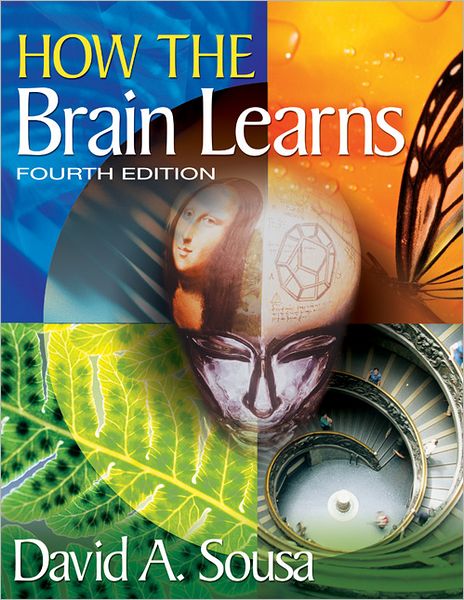
Currently Reading: “How The Brain Learns” By: David A Sousa

January 26
2014